NMI vs. Authorize.net: Which Is the Best High Risk Payment Gateway?
Looking for the best high risk payment gateway? Discover why NMI beats Authorize.net for load balancing and MID management in this expert comparison guide.

The Short Answer: Which Gateway Wins for Load Balancing?
For high-risk e-commerce merchants, NMI (Network Merchants, LLC) is the clear winner for load balancing. While Authorize.net is a reliable legacy platform, NMI was specifically architected to handle multiple Merchant IDs (MIDs) within a single interface, allowing for automated transaction routing, volume capping, and sophisticated risk mitigation. Authorize.net, while stable for low-risk businesses, lacks the native "cascading" logic required to balance volume across different merchant accounts seamlessly.
Understanding the High-Risk Gateway Landscape
If you operate in industries like CBD, nutra, online gaming, debt collection, or high-ticket coaching, your relationship with payment processing is inherently fragile. High-risk businesses face sudden volume caps, elevated chargeback scrutiny, and the constant threat of account termination.
In this environment, searching for the best high risk payment gateway isn't just about finding the lowest transaction fee. It’s about building infrastructure that prevents your business from going dark if one bank decides to stop supporting your industry. This is where the technical nuance of "load balancing" becomes your most important business asset.
What is Load Balancing and Why Do You Need It?
In payment processing, load balancing is the practice of distributing transaction volume across multiple merchant accounts (MIDs). Instead of sending $500,000 in monthly sales through a single bank, a smart merchant might route $100,000 to five different banks.
Why bother with this complexity? There are three primary reasons:
- Risk Mitigation: If one MID is shut down due to a sudden spike in chargebacks, the other four stay active. Your revenue doesn't drop to zero.
- Chargeback Management: By spreading volume, you can keep your chargeback-to-transaction ratio below the critical 1% threshold required by Visa and Mastercard.
- Volume Caps: High-risk processors often impose monthly limits. Load balancing allows you to scale past those limits by "overflowing" volume into a secondary account.
NMI: The Gold Standard for Multi-MID Environments
NMI is widely considered the industry leader for high-risk e-commerce precisely because of its Advanced Transaction Routing Interface (ATRI). This isn't just a feature; it is the core of the NMI value proposition.
How NMI’s Load Balancing Works
NMI allows you to plug dozens of different merchant accounts—from different banks and different processors—into one single gateway login. You can then set specific rules for how money flows:
- Percentage-based routing: Send 40% of traffic to Bank A and 60% to Bank B.
- Volume caps: Automatically stop sending transactions to Bank A once it hits $50,000 for the month, rerouting everything to Bank B.
- Chargeback monitoring: Some advanced integrations can even pause an account if it detects a trend toward high disputes.
- Stickiness: NMI can ensure that if a customer returns for a rebill or a second purchase, they are processed through the same MID as their first transaction, which reduces the likelihood of fraud flags.
Developer Friendliness
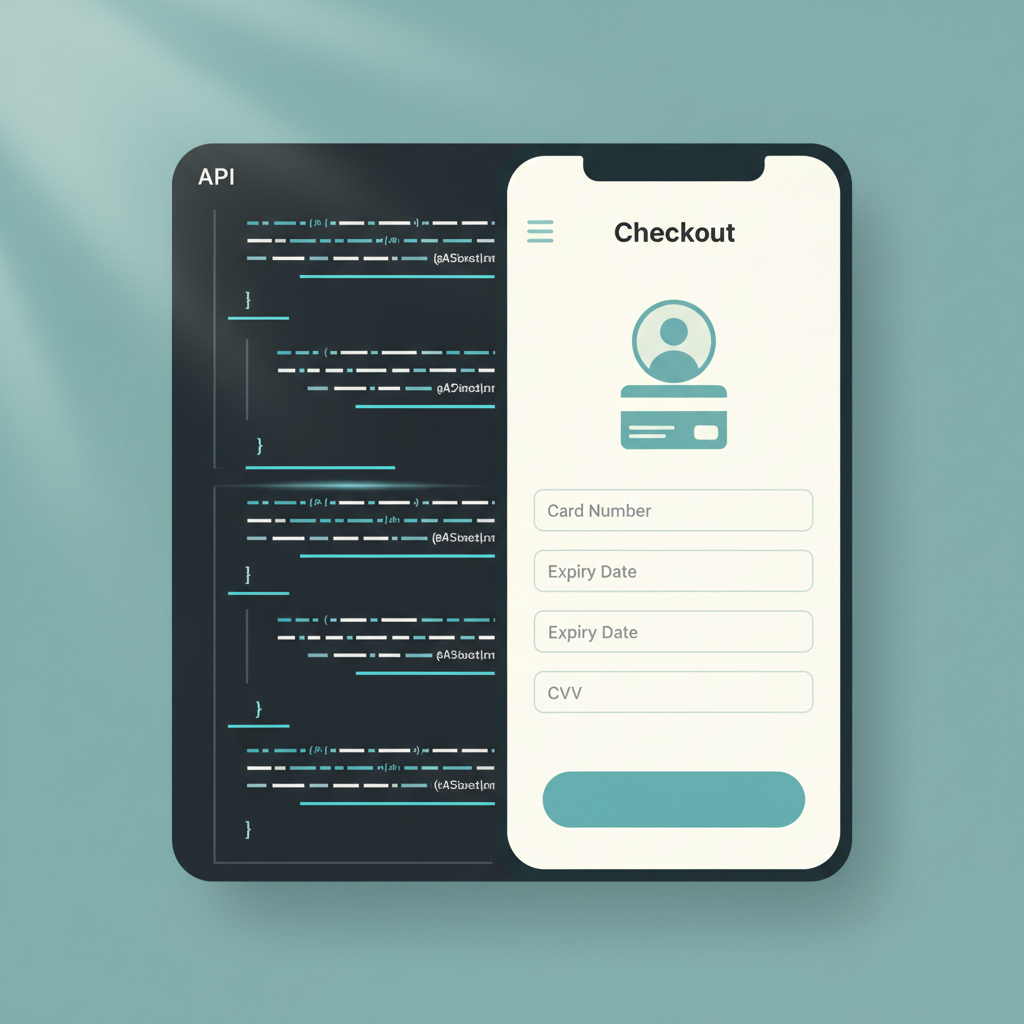
For developers, NMI is a dream. Their API is robust and supports "Customer Vaulting," meaning you can store a customer's credit card info securely and then charge that card against any of your connected MIDs without the customer ever knowing the difference.
Authorize.net: The Low-Risk King Trying to Adapt
Authorize.net is perhaps the most famous name in the gateway world. Owned by Visa, it is incredibly stable, has a clean UI, and integrates with virtually every shopping cart on the planet. However, for high-risk merchants, it has significant limitations.
The Authorize.net Limitation
Traditionally, Authorize.net is a "one account, one MID" platform. While they have introduced features to manage multiple accounts, they are often siloed. To "load balance" in Authorize.net, a merchant typically has to build custom logic on their own website’s backend to decide which API keys to use for which transaction.
This creates a massive technical debt for the merchant. If you want to change your routing percentages, you have to rewrite code on your site, rather than just clicking a button in your gateway dashboard. Furthermore, Authorize.net’s risk filters are effective but can be over-sensitive for certain high-risk industries, leading to higher false-decline rates.
Comparing the Two: A Side-by-Side Breakdown
| Feature | NMI | Authorize.net | | :--- | :--- | :--- | | Native Load Balancing | Yes (Built-in ATRI) | No (Requires 3rd party or custom code) | | Multiple MIDs | Unlimited under one login | Usually one login per MID | | Industry Reputation | High-risk specialist | General market/Low-risk focus | | Customer Vaulting | Cross-MID compatible | Account-specific | | Ease of Use | Moderate (More dials to turn) | Very High (Simple interface) | | Cost | Typically higher monthly/per-trans fees | Competitive, but limits high-risk options |
The "Best High Risk Payment Gateway" Choice for Your Business
If you are a merchant doing more than $20,000 a month in a high-risk category, the decision usually comes down to your growth trajectory.
Choose NMI if:
- You have more than one merchant account or plan to get more soon.
- You use a recurring billing model (subscriptions).
- You need to stay under strict volume caps or chargeback ratios.
- You want a "future-proof" setup that doesn't require re-coding your website every time you add a new bank.
Choose Authorize.net if:
- You are a "low-risk" high-risk merchant (e.g., high-ticket items but low dispute rates).
- You only have, and only ever plan to have, one merchant account.
- You value a simple, familiar interface over advanced technical control.
The Stealth Factor: High-Risk Underwriting
It is important to remember that a gateway is just the "software" through which transactions flow. It is not the bank (the processor) that actually moves the money. The best high risk payment gateway is useless without a solid high-risk merchant account behind it.
NMI is highly favored by high-risk underwriters because it shows that the merchant is sophisticated. When an underwriter sees you are using NMI with load balancing, they know you have a strategy to protect their bank from excessive chargeback exposure. This can actually make it easier to get your account approved in the first place.
Final Thoughts and the OrbitBNK Advantage
Infrastructure is the foundation of any e-commerce business, but for high-risk merchants, it is the difference between survival and extinction. Choosing between NMI and Authorize.net isn't about which software is "better" in a vacuum; it’s about which one provides the redundancy you need to scale safely.
NMI's ability to act as a central hub for multiple banking relationships makes it the undisputed champion for load balancing. It allows you to treat your payment processing like a portfolio, diversifying your risk just as you would with your investments.
Confused about your effective rate or worried your gateway isn't optimized? At OrbitBNK, we help merchants strip back the complexity of high-risk processing. Whether you're fighting chargebacks or just looking for a more stable home for your volume, we can help.
[Upload your most recent processing statement here] for a free, transparent review. We’ll show you exactly where the hidden fees are and whether a switch to NMI could save your business from its next processing headache.
Frequently asked questions
What is the best high risk payment gateway for subscriptions?+
NMI is widely considered the best choice for high-risk subscriptions due to its Customer Vault and native load balancing. This allows you to store customer data securely and route recurring payments across multiple merchant accounts to maintain healthy volume levels.
Can I use Authorize.net for high-risk businesses?+
Yes, Authorize.net can be used for high-risk businesses, but you must find a high-risk processor that is compatible with the gateway. However, it lacks advanced load balancing features, making it less ideal for high-volume merchants with multiple accounts.
Does NMI charge extra for load balancing?+
Yes, NMI typically charges an additional monthly fee for the Advanced Transaction Routing Interface (ATRI) feature, and there may be small per-transaction fees associated with routing. Most high-risk merchants find this cost negligible compared to the risk of an account shutdown.
How many merchant accounts do I need for load balancing?+
Most experts recommend at least two merchant accounts once you exceed $50,000 in monthly volume. This provides a backup in case one account is capped or terminated, ensuring your business can continue to process orders.
What is the difference between a gateway and a processor?+
A gateway (like NMI or Authorize.net) is the software that sends transaction data to the bank. A processor is the financial institution that actually moves the money and handles the underwriting. You need both to accept credit cards online.
See your real processing math
Upload your merchant statement for a free, line-by-line OrbitBNK review.
Start The Clearing