Chargeback Alerts vs CAU: Combatting Involuntary Churn Effectively
Discover the critical differences between chargeback alerts vs CAU and how both technologies work together to protect your recurring revenue and merchant health.
The Strategic Choice Between Retention and Protection
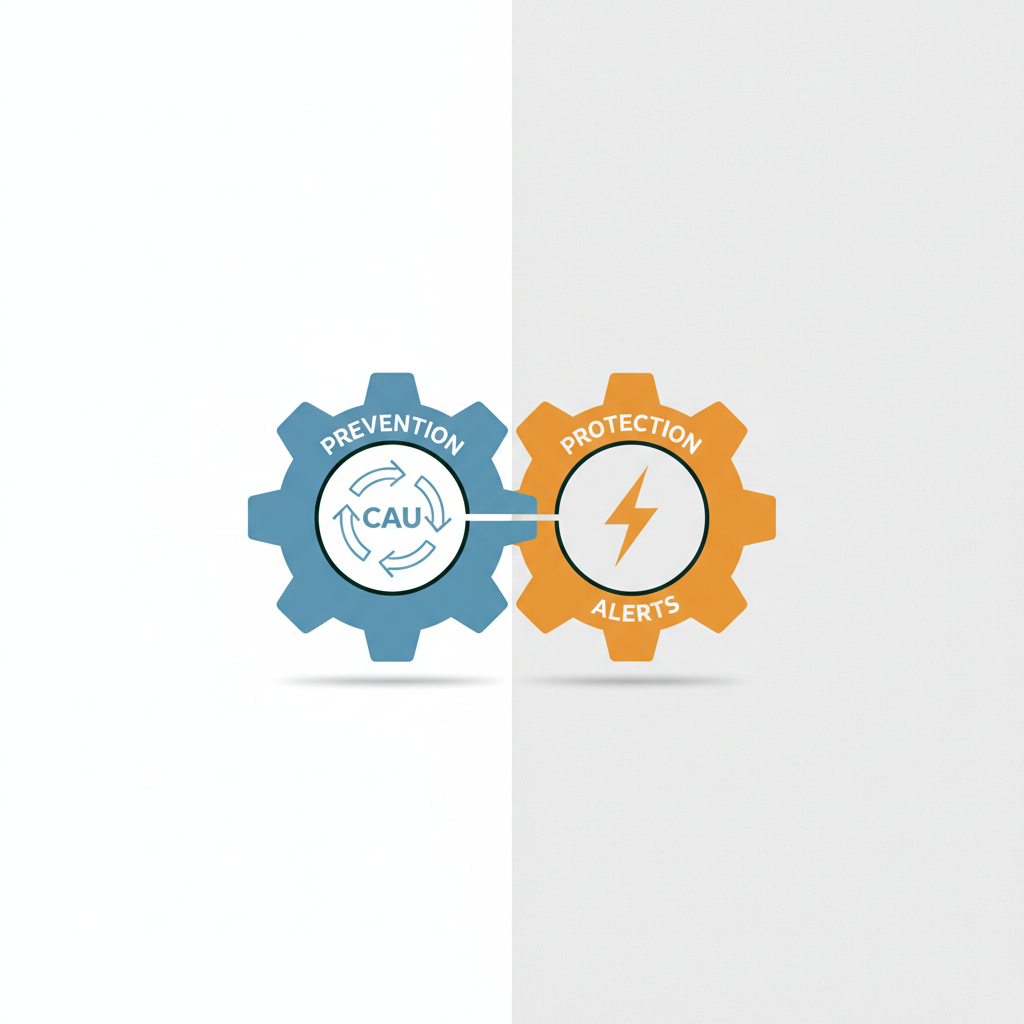
To effectively reduce involuntary churn, merchants must distinguish between technical failure and customer dissatisfaction. Automatic Card Account Updater (CAU) is a proactive infrastructure tool that updates expired or reissued card data to prevent transaction failures, while Chargeback Alerts are a reactive defensive mechanism that notifies merchants of impending disputes before they escalate into formal chargebacks. While CAU preserves the transaction before it happens, Alerts protect the merchant account after a customer takes action.
In the high-stakes world of subscription billing and e-commerce, involuntary churn is a silent thief. It accounts for nearly 20% to 40% of all customer cancellations. However, "involuntary" is a broad term. It encompasses both the customer who forgot to update their expired expiration date and the customer who didn't recognize a charge and called their bank. Solving these requires two very different sets of tools.
Understanding Automatic Card Account Updater (CAU)
Automatic Card Account Updater—often referred to by network-specific names like Visa Account Updater (VAU) or Mastercard Automatic Billing Care (ABU)—is a service provided by the card brands to help merchants maintain uninterrupted service with their customers.
How CAU Works
When a consumer’s credit card expires, is lost, stolen, or upgraded, the bank issues a new card with a new number or expiration date. For a subscription merchant, this usually results in a "Do Not Honor" or "Expired Card" decline code.
With CAU, the process is automated behind the scenes:
- The merchant submits a batch of stored payment credentials to their processor.
- The processor queries the card networks (Visa, Mastercard, Amex, Discover).
- The networks check for updated credentials provided by the issuing banks.
- If a match is found, the merchant’s database is updated with the new card number or expiration date before the next billing cycle begins.
The Impact on Revenue
CAU is purely a technical fix. It ensures that the "plumbing" of your payment processing remains functional. By updating credentials before a transaction is even attempted, you avoid the administrative costs of dunning emails, the customer friction of "update your payment" notifications, and the immediate loss of revenue from a failed capture. For large-scale SaaS or subscription boxes, CAU can improve authorization rates by 3% to 5%, which translates directly to the bottom line without any marketing spend.
The Role of Chargeback Alerts (Ethoca & Verifi)
Chargeback Alerts (frequently associated with providers like Ethoca and Verifi) address a different part of the churn lifecycle. These tools intervene when a customer initiates a dispute with their issuing bank but before that dispute becomes a formal chargeback on your merchant statement.
How Alerts Work
When a cardholder calls their bank to dispute a charge—perhaps due to "unrecognized transaction," "canceled subscription," or "fraud"—the bank notifies the alert network. The network then sends a real-time alert to the merchant.
Once an alert is received, the merchant typically has a window of 24 to 72 hours to:
- Refund the transaction: This satisfies the customer and the bank.
- Stop the service: This prevents further delivery of goods or access to software.
- Resolve the issue: In some cases, reaching out to the customer can clarify a misunderstanding.
By refunding the transaction immediately, the merchant prevents a "chargeback" from being recorded against their Merchant Identification Number (MID). This is critical because high chargeback ratios can lead to fines, placement in monitoring programs (like VFMP), or the loss of processing privileges entirely.
Chargeback Alerts vs CAU: A Side-by-Side Comparison
To understand where to invest your infrastructure budget, we must look at where these tools sit in the payment flow.
| Feature | Automatic Card Account Updater (CAU) | Chargeback Alerts (Ethoca/Verifi) | | :--- | :--- | :--- | | Primary Goal | Prevent technical declines | Prevent formal chargebacks and MID damage | | Timing | Pre-transaction (Proactive) | Post-transaction / Pre-dispute (Reactive) | | Cost Structure | Usually a small fee per "match" or successful update | A higher flat fee per alert received | | Churn Type | Technical involuntary churn (expired cards) | Customer-initiated churn (dispute/dissatisfaction) | | Customer Friction | Zero; it happens in the background | High; the customer has already contacted their bank |
Why You Cannot Choose Just One
If you only implement CAU, you are successfully charging customers, but you aren't listening to them. You might be charging a customer who thought they canceled, leading to an aggressive chargeback.
Conversely, if you only implement Chargeback Alerts, you are protecting your MID, but you are still losing thousands of dollars every month to simple expiration date errors that could have been fixed automatically.
The Synergy of a Full-Stack Strategy
An intelligent infrastructure uses CAU to keep the revenue flowing and Alerts to act as a safety net for merchant account health.
Consider this scenario: A customer’s card is reissued. CAU updates the info. You successfully bill the customer. However, the customer had intended to cancel but forgot. They see the charge and call their bank. Your Chargeback Alert triggers. You refund the $50 and cancel the account.
While you lost the $50 sale, you saved the $25-$50 chargeback fee and, more importantly, you kept your chargeback ratio low. Without CAU, you would have lost the sale anyway to a decline. Without the Alert, you would have lost the sale plus a fee plus a strike against your merchant account.
Real-World Implementation Nuances
As a senior payment expert, I often see merchants make the mistake of assuming their processor handles all of this automatically. This is rarely the case.
1. Not all banks participate in CAU. While most major US issuers do, international participation can be spotty. This means CAU is a net positive but not a 100% solution. You still need a robust dunning process for the cases where CAU fails.
2. The cost of Alerts can be high. If your average order value (AOV) is $10, paying $35 for an alert to prevent a chargeback might feel like a losing game. However, you aren't paying $35 to save $10; you are paying $35 to save your ability to process credit cards next month.
3. Data Enrichment. Modern Chargeback Alert systems (like Verifi’s RDR - Real-time Dispute Resolution) can automate the refund process based on rules you set. This removes the manual labor of managing alerts, further reducing the "hidden" costs of churn management.
Identifying the Best Path for Your Business
If you are a high-volume subscription merchant, you are likely suffering from both types of churn.
- Audit your decline codes: If you see a high percentage of '05: Do Not Honor' or '54: Expired Card', your first priority is CAU and possibly Network Tokenization (a more advanced version of CAU).
- Audit your dispute ratios: If your chargeback-to-transaction ratio is creeping toward 0.65% or higher, your first priority is Chargeback Alerts.
Conclusion: Infrastructure is Your Best Retention Tool
Reducing involuntary churn isn't just about better email marketing; it's about the technical integrity of your payment stack. By understanding the difference between chargeback alerts vs CAU, you can build a resilient system that captures every possible dollar while shielding your business from the regulatory and financial risks of disputes.
Most merchants are overpaying for these services or, worse, don't have them configured correctly. At OrbitBNK, we specialize in dissecting these exact costs.
Is your processing setup leaking revenue? Upload a recent merchant statement for a free, comprehensive OrbitBNK review. We’ll identify exactly where your CAU is failing and if your alert strategy is cost-effective.
Frequently asked questions
What is the main difference between CAU and Chargeback Alerts?+
CAU (Card Account Updater) proactively updates expired or replaced credit card information to prevent transaction declines. Chargeback Alerts reactively notify merchants when a customer initiates a dispute, allowing the merchant to refund the transaction before it becomes a formal chargeback.
Does CAU stop all card-related declines?+
No. While CAU is highly effective for major banks, not all issuing banks participate in the update networks. Additionally, it cannot prevent declines due to insufficient funds or closed accounts.
Are chargeback alerts worth the cost for small businesses?+
Yes, if your merchant account is at risk of being shut down due to high dispute ratios. While the per-alert fee can be high, it is significantly cheaper than losing your processing privileges or paying heavy fines from card networks.
Can I use both Ethoca and Verifi alerts at the same time?+
Yes. Ethoca and Verifi cover different networks of banks. Using both (often through a single integrator) provides the widest possible coverage for dispute notifications.
How long does it take for CAU to update a card?+
Updates usually happen in cycles. Most processors query the networks 2-7 days before a scheduled recurring billing event to ensure the data is as fresh as possible for the transaction attempt.
See your real processing math
Upload your merchant statement for a free, line-by-line OrbitBNK review.
Start The Clearing