Direct API vs. Hosted Payment Pages: Scaling High-Volume Sites
Compare direct vs hosted payment integration to optimize security and conversion. Expert advice for high-volume merchants choosing payment infrastructure.
The Core Comparison: Security vs. Control
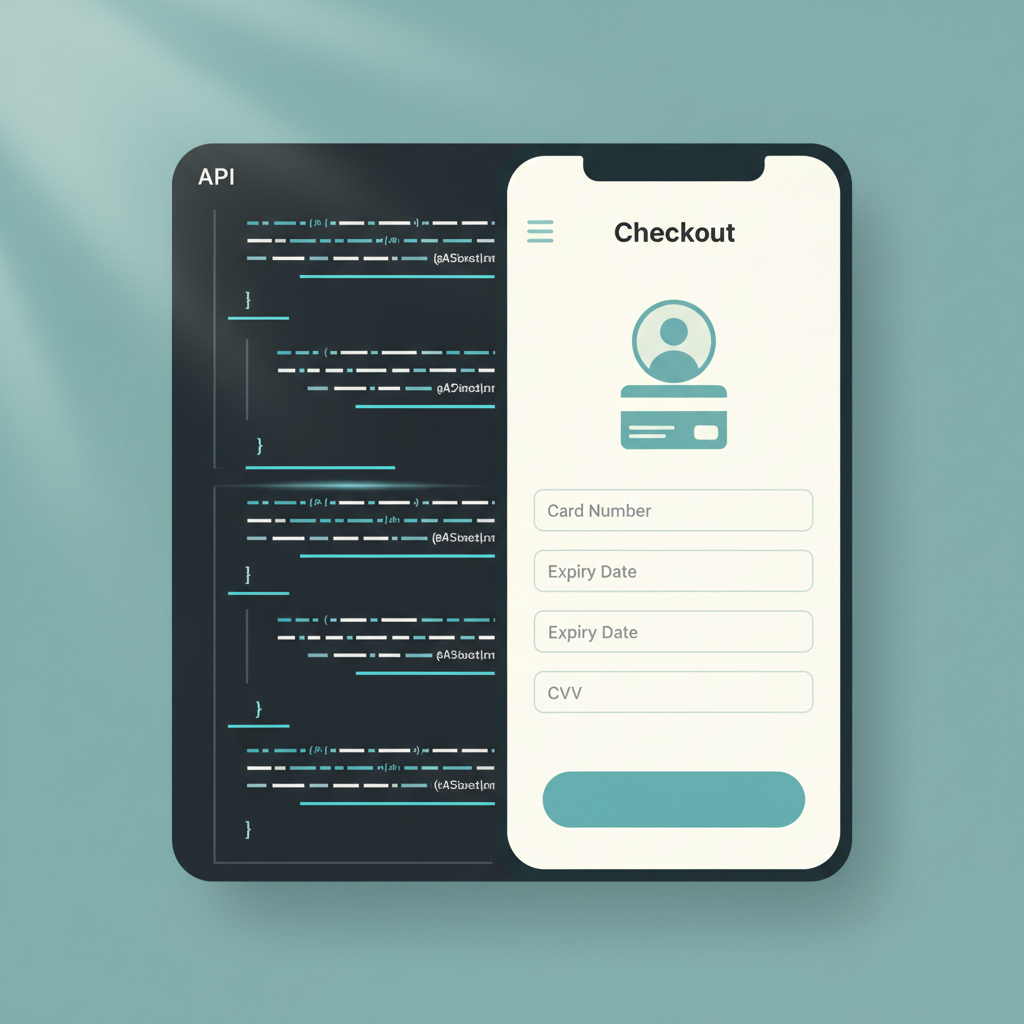
Choosing between a direct API integration and a hosted payment page is a fundamental architectural decision for high-volume merchants. Direct API integrations offer maximum control over the user experience and higher conversion potential by keeping users on-site, but they require rigorous PCI DSS compliance. In contrast, hosted payment pages minimize security liability by offloading data handling to the provider, often at the cost of a slight drop in conversion due to browser redirects or layout inconsistencies.
For businesses processing millions in monthly volume, the choice isn't just about code—it's about balancing the cost of security audits against the marginal gains of a perfectly optimized checkout flow.
Understanding the Infrastructure
What is a Direct API Integration?
In a direct API (often called server-to-server) model, your website's server communicates directly with the payment processor's API. The customer enters their credit card details directly into fields hosted on your domain. Your servers collect this data and transmit it to the gateway.
What is a Hosted Payment Page (HPP)?
With a hosted payment page, the sensitive payment fields—or the entire checkout page—are hosted by the payment service provider (PSP). This can happen via a full-page redirect or an iFrame embedded on your site. The critical distinction is that the raw card data never touches your servers.
The Security Trade-off: PCI DSS Compliance
Security is the primary driver behind the move toward hosted solutions. Under the Payment Card Industry Data Security Standard (PCI DSS), the level of scrutiny you face depends entirely on how much cardholder data (CHD) your environment handles.
- Hosted Pages (SAQ A): Because you never see, touch, or transmit card data, you typically qualify for the Self-Assessment Questionnaire A (SAQ A). This is the simplest form of compliance, often requiring only a few dozen checkmarks.
- Direct API (SAQ D): If card data hits your server, even for a millisecond before being encrypted and sent to the gateway, you are in scope for SAQ D. This is the most stringent level of compliance, requiring hundreds of security controls, regular vulnerability scans, and potentially expensive third-party audits.
For high-volume merchants, the cost of maintaining SAQ D compliance can reach six figures annually when factoring in specialized DevOps talent and infrastructure hardening.
Conversion Rates: The Battle for the Frictionless Checkout
For high-volume sites, a 0.5% difference in checkout conversion can equate to millions in lost or gained revenue. This is where Direct API integration historically wins.
- Brand Continuity: Redirecting a user to a third-party URL (e.g.,
checkout.payments-processor.com) creates a moment of friction. Even if the page is branded, the shift in URL can trigger "security anxiety" in savvy shoppers, leading to cart abandonment. - Latency: Every redirect adds a DNS lookup and a round-trip to a different server. In the world of high-volume e-commerce, every 100ms of latency can measurably degrade conversion.
- A/B Testing Freedom: With a direct API, you can test every micro-interaction—the color of the "Pay Now" button, the placement of the CVV field, and the error messaging. Hosted pages often limit your CSS and JavaScript control, making deep optimization impossible.
The Hybrid Approach: The Modern Standard
Most modern payment giants (like Stripe, Adyen, and Braintree) have pioneered a middle ground: Component-based or Tokenized Hosted Fields.
In this model, individual input fields (Credit Card Number, Expiry, CVV) are tiny iFrames hosted by the provider, but they are styled to look like they are part of your native form.
- The Benefit: You get the conversion benefits of an on-site experience because the user never leaves your domain.
- The Security: Because the data is entered into the provider’s iFrame, your servers remain "out of scope" for the most grueling PCI requirements, typically allowing for SAQ A-EP compliance.
Latency and Uptime for High-Volume Sites
High-volume merchants must consider the reliability of the connection.
- API Resilience: Direct API calls require robust error handling. If your server fails to connect to the gateway, you need a retry logic that doesn't double-charge the customer.
- Hosted Page Stability: If you rely on a redirect, you are entirely at the mercy of the provider's frontend uptime. If their hosted page goes down, your checkout is dead, and there is nothing your dev team can do about it.
We often see high-volume merchants implement a "failover" strategy: a primary direct API integration with a secondary hosted page ready to act as a backup if the API endpoint experiences latency spikes.
Strategic Considerations for High-Risk and International Scale
If you operate in high-risk verticals or are expanding internationally, the "Direct vs. Hosted" debate takes on new nuances:
- SCA and 3D Secure: In Europe, Strong Customer Authentication (SCA) is mandatory. Hosted pages often handle the 3D Secure 2.0 challenge flow natively. Implementing this via Direct API requires significant custom development to handle the various banking redirects and authentication pop-ups.
- Local Payment Methods: Scaling globally means offering more than just Visa/Mastercard. Integration of iDEAL, Pix, or Alipay is often significantly faster via a hosted page that aggregates these methods automatically, rather than building custom API calls for every local scheme.
Making the Choice: A Decision Matrix
Choose Direct API if:
- You have a dedicated DevOps and Security team capable of managing SAQ D.
- Your brand is strong enough that any redirect causes a measurable drop in trust.
- You are running intensive A/B testing on your checkout flow.
- Your volume justifies the high overhead of compliance audits.
Choose Hosted / Hybrid Fields if:
- You want to get to market quickly with minimal security liability.
- You lack the resources for annual PCI audits.
- You need to support dozens of international payment methods out of the box.
- You want to maintain a custom UI without the server-side risk (Hybrid/Tokenized).
The OrbitBNK Perspective
Infrastructure is only half the battle. At OrbitBNK, we see merchants obsess over the integration method while ignoring the effective rate they are paying on the backend. Whether you use an API or a hosted page, your processing costs are driven by interchange, scheme fees, and merchant markups.
High-volume merchants often find that after optimizing their API for conversion, they are still losing 50-80 basis points to inefficient routing or misconfigured MCC codes.
Is your current integration costing you more than it should? Upload a recent processing statement for a confidential, expert review. We’ll help you decode your effective rate, identify hidden fees, and ensure your infrastructure—whether direct or hosted—is actually working for your bottom line.
Frequently asked questions
Is direct API integration more secure than a hosted payment page?+
Technically, no. Hosted payment pages are generally considered more secure for the merchant because they shift the risk of handling sensitive card data to the payment provider. Direct API integration requires the merchant to secure their own servers to a much higher standard (PCI DSS SAQ D) to prevent data breaches.
Which integration method offers better conversion rates?+
Direct API integration usually offers higher conversion rates because it provides a seamless, on-site experience without redirects. However, modern 'hosted fields' or iFrame solutions offer a similar seamless experience while maintaining the security benefits of a hosted page.
What is the difference between PCI SAQ A and SAQ D?+
SAQ A is a short self-assessment for merchants who outsource all cardholder data functions to validated third parties (hosted pages). SAQ D is the most comprehensive assessment for merchants who store, process, or transmit cardholder data directly (Direct API).
How does integration type affect transaction speed?+
Direct API calls can be faster as they happen server-to-server. Hosted pages involve browser redirects or loading external iFrames, which can add 'perceived latency' for the user, though the actual processing time is often similar.
Can I switch from a hosted page to a direct API later?+
Yes, but it is a significant undertaking. It requires rewriting your checkout logic, upgrading your PCI compliance level, and potentially undergoing a formal audit. Many merchants start with hosted pages and migrate to API or hybrid models as their volume and technical resources grow.
See your real processing math
Upload your merchant statement for a free, line-by-line OrbitBNK review.
Start The Clearing