Stripe Shut Down My Coaching Business: Recovery and Alternatives
Has Stripe shut down your coaching account? Learn why online coaches are flagged and discover how to recover funds and find a reliable payment processor.
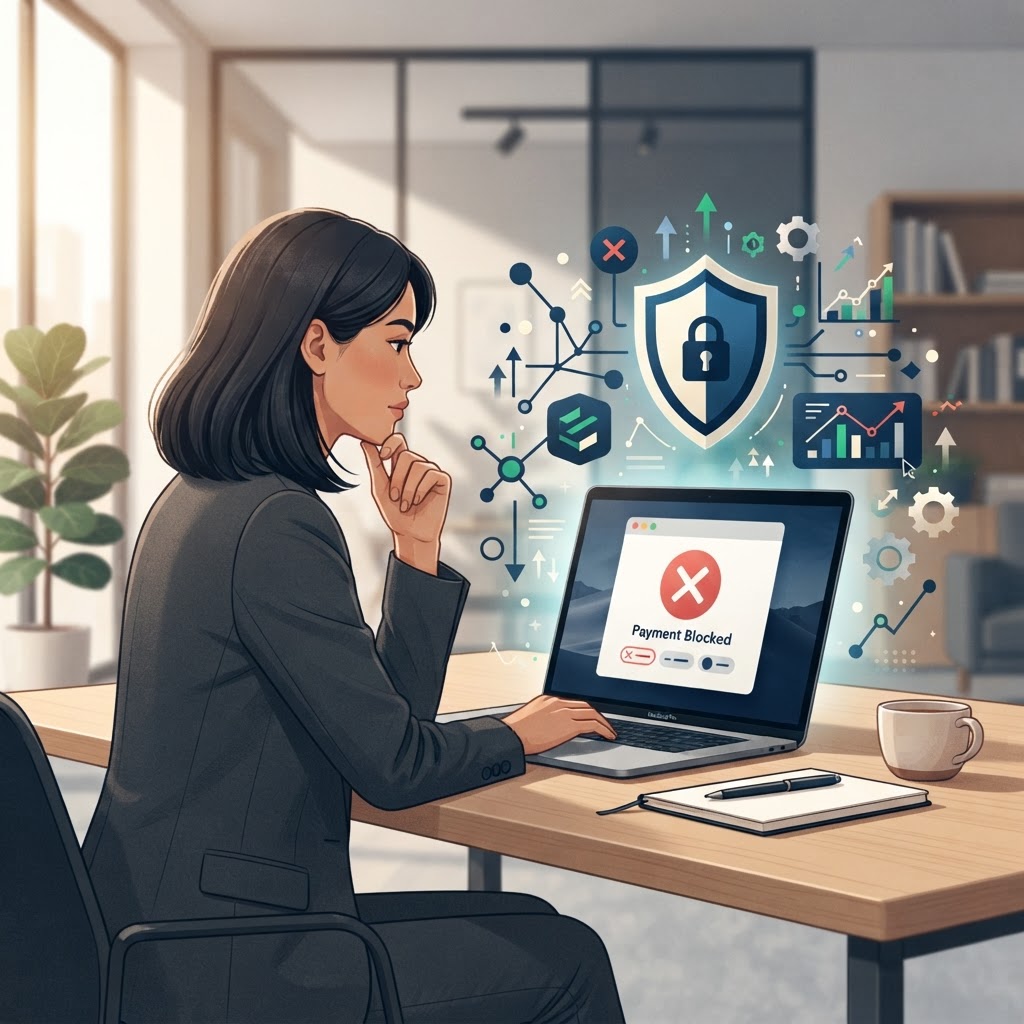
Stripe frequently shuts down online coaching accounts because they classify them as high-risk due to high chargeback rates, 'future delivery' of services, and aggressive marketing claims. Recovery requires securing a dedicated merchant account with a processor that specializes in the coaching industry rather than relying on a payment aggregator. Most coaches can regain stability by pivoting to a provider that underwrites their business model upfront rather than post-signup.
Receiving a termination email from your payment processor is a rite of passage for many successful coaching businesses, but that doesn't make the experience any less stressful. If you have woken up to a notification that your funds are held for 90 to 180 days and your account is being closed, you are not alone. The online coaching sector has become a primary target for risk departments at major aggregators like Stripe, PayPal, and Square.
This guide explains why these shutdowns happen, how to manage the immediate fallout, and how to transition to a more stable payment infrastructure that can support your growth.
Why Stripe Flags Online Coaching Accounts
To understand why your account was restricted, you first need to understand Stripe's business model. Stripe is a payment aggregator, not a direct merchant account provider. They allow you to sign up in minutes because they do not perform deep underwriting at the start. Instead, they monitor your account as you process. When your volume hits a certain threshold—often around $10,000 to $20,000 per month—their automated systems begin a more rigorous review.
Online coaching owners are typically flagged for three main reasons:
- Future Delivery Risk: If you sell a 6-month mastermind or a 12-week transformation program, you are taking money today for services provided in the future. If your business were to close tomorrow, the bank would be liable for those refunds. This "exposure window" is a major red flag for aggregators.
- Marketing Claims: Compliance bots scan landing pages for words like "guaranteed results," "financial freedom," or specific income claims. Even if your coaching is legitimate, these terms are associated with high-risk "get rich quick" schemes in the eyes of a bank.
- High Ticket Volatility: Coaching often involves high transaction amounts ($2,000 to $10,000+). A single chargeback on a high-ticket item significantly skews your chargeback-to-sales ratio, which must typically stay under 1% to avoid automated flags.
The Warning Signs: From Under Review to Account Terminated
Most shutdowns are preceded by subtle shifts in account behavior. You might notice that your "payout schedule" has changed from a 2-day rolling basis to a 7-day or 14-day delay. This is often the first sign that the risk department is monitoring your volatility.
Another sign is a sudden request for more documentation, such as copies of your coaching agreements, proof of delivery (like course login logs), or marketing materials. If you receive these requests, it is vital to respond professionally and promptly. However, once a human reviewer looks at a coaching business model, they often decide it falls outside of their "Terms of Service," leading to the dreaded termination notice. If you find yourself in this position, you may need emergency reactivation services to help navigate the release of held funds and secure a new bridge for your revenue.
When to Switch Processors (Before the Shutdown Happens)
Waiting for a shutdown to find a new processor is like waiting for a fire to buy insurance. If your coaching business matches any of the following criteria, you should proactively look for a dedicated merchant account:
- Revenue Growth: You are consistently processing more than $15,000 per month.
- High Ticket Sales: You regularly process individual transactions over $2,000.
- Long Delivery Cycles: Your programs last longer than 30 days.
- International Clients: You have a high percentage of cross-border transactions which increase fraud risk scores.
By moving to a processor that understands various industry sectors including high-risk coaching, you undergo the underwriting process before you start processing. This means the bank already knows your chargeback history and business model, making a sudden shutdown far less likely.
The Documentation You Need to Secure a New Processor
When you move away from Stripe to a dedicated merchant account, the application process is more rigorous. You will need to provide a "merchant package" that proves the legitimacy and stability of your coaching business.
Be prepared to gather the following:
- Processing Statements: Typically the last 3 to 6 months of statements from Stripe or your previous processor. These must show your total volume, refund rates, and chargeback ratios.
- Bank Statements: The last 3 months of your business operating bank account statements to prove liquidity.
- Marketing & Fulfillment: Links to your sales pages, your coaching contract, and a clear description of your refund policy.
- Identification: A government-issued ID and proof of business formation (Articles of Incorporation or LLC filing).
If you have been shut down, having these documents ready is the difference between being back online in 48 hours or being out of business for weeks.
Why Aggregators Fail Scalable Coaching Models
Aggregators like Stripe are built for simplicity, not for high-risk nuances. They operate on a "one size fits all" logic. If a specific coaching niche—like fitness coaching or business consulting—sees a spike in fraud across the entire platform, Stripe may decide to de-risk by purging many accounts in that category simultaneously, even the "good" ones.
Furthermore, when an aggregator shuts you down, they often place you on the TMF (Terminated Merchant File) or MATCH list if they suspect fraud. This can make it nearly impossible to get a standard bank account in the future. A dedicated merchant account protects you from this "guilt by association" by giving you a direct relationship with an acquiring bank.
How OrbitBNK helps
OrbitBNK serves as a payment intelligence layer between coaching businesses and the complex world of merchant processing. We don't just point you to a new provider; we provide the data and strategy needed to ensure your next account is permanent.
Our process involves a deep-dive review of your current processing statements to identify why you were flagged. We help you clean up your "processing profile" by identifying high-risk triggers in your marketing or your billing cycles. Once your profile is optimized, we use our network to get matched with a specialized processor that has a specific appetite for online coaching.
We assist in the preparation of your underwriting documents, ensuring that your business is presented to the bank in the most favorable light. By proactively addressing potential red flags—like your refund policy or delivery timelines—we help you secure accounts with better terms and lower reserves.
Finding a Sustainable Path Forward
Recovering from a Stripe shutdown is a two-step process: securing your funds and securing your future. While the immediate loss of cash flow is painful, many online coaching owners find that moving to a dedicated merchant account actually saves them money in the long run through lower effective rates and better support.
To prevent future interruptions, ensure you are using robust chargeback management tools and that your clients are signing clear, legally-binding contracts. Transparency with your customers about what they are buying and when they will receive it is your best defense against the disputes that trigger bank flags.
If your coaching business has been restricted or if you are worried your current setup is a ticking time bomb, don't wait for the next automated email to arrive. You can take control of your payment infrastructure today. Contact our team for a review of your situation and let us help you find a stable, long-term home for your processing.
Frequently asked questions
Why did Stripe suddenly close my coaching account without warning?+
Stripe uses automated algorithms to monitor risk. Coaching is considered high-risk due to 'future delivery' and high chargeback potential. If your volume spikes or your marketing claims trigger their compliance bots, they may terminate the account instantly to protect themselves from financial liability.
How long will Stripe hold my funds after a shutdown?+
Stripe typically holds funds for 90 to 180 days. This period covers the window in which a customer can legally file a chargeback. However, providing proof of delivery and professional documentation can sometimes help in negotiating an earlier release.
Can I open a new Stripe account for my coaching business?+
Opening a new account under a different name or email (often called 'ghosting') is against Stripe's terms of service and usually results in a permanent ban. It is better to move to a dedicated high-risk merchant account that understands the coaching business model.
What is a 'High Risk' merchant account for coaches?+
A high-risk merchant account is a specialized payment processing setup where the bank acknowledges the inherent risks of your industry (like high ticket prices and digital delivery) upfront. This results in more stable processing compared to 'low-risk' aggregators like Stripe.
Will a Stripe shutdown affect my credit or my ability to get other accounts?+
A standard account closure doesn't usually affect your personal credit, but if you are placed on the MATCH list (Terminated Merchant File) due to high chargebacks or suspected fraud, it can prevent you from getting any merchant account for up to five years.
See your real processing math
Upload your merchant statement for a free, line-by-line OrbitBNK review.
Start The Clearing