Identifying Non-Qualified Surcharge Traps in Tiered Merchant Pricing
Learn how to spot tiered pricing hidden fees and non-qualified surcharge traps on your merchant statement with this expert guide to lowering processing costs.

The Direct Answer: What Is a Non-Qualified Surcharge Trap?
A "non-qualified surcharge" trap occurs when a merchant processor lures a business with a low advertised "qualified" rate, only to route the majority of transactions into much more expensive "mid-qualified" or "non-qualified" tiers based on opaque, internal criteria. To identify these tiered pricing hidden fees, you must compare your total monthly fees against your total processing volume to find your 'effective rate' and look specifically for line items labeled 'Surcharge,' 'Non-Qual,' or 'Disc Adj' on your monthly statement.
The Anatomy of the Tiered Pricing Model
To understand the trap, you first have to understand the architecture of tiered pricing. Unlike Interchange Plus (IC+)—which passes the direct cost of the card network through to you with a fixed markup—tiered pricing bundles hundreds of different interchange categories into three or four arbitrary buckets:
- Qualified Rate: The 'teaser' rate. Usually reserved for basic, non-rewards debit cards swiped in person. This is the rate your salesperson likely used to close the deal.
- Mid-Qualified Rate: Often triggered by rewards cards or certain keyed-in transactions. Expect to pay 0.50% to 1.50% more than the qualified rate.
- Non-Qualified Rate: The 'catch-all' for corporate cards, high-level rewards (like Amex or premium Visa Infinite cards), and Card-Not-Present (CNP) transactions. These are often 2.00% to 3.00% higher than the qualified rate.
The "trap" is that the processor, not the card network, decides which cards fall into which bucket. Because the processor keeps the difference between the actual interchange cost and the tier price, they are financially incentivized to make the "Qualified" bucket as small as possible.
Why Your Transactions are 'Downgrading'
In the industry, we call the movement from a Qualified rate to a Non-Qualified rate a "downgrade." While some downgrades are legitimate—such as failing to provide an AVS (Address Verification System) match on a keyed transaction—many are simply the result of how your processor has structured their tiers.
Common Downgrade Triggers
- Reward Tiers: Almost every modern consumer uses a rewards card. If your processor puts "Visa Signature" cards in the Non-Qualified bucket, you are being surcharged on the majority of your daily volume.
- Business and Corporate Cards: These carry higher interchange costs naturally, but tiered processors often add a massive surcharge on top of that cost, rather than just passing through the difference.
- Batching Delays: If you fail to close your terminal batch within 24 hours, many tiered contracts automatically downgrade every transaction in that batch to Non-Qualified.
- Missing Data: For B2B merchants, failing to include Level 2 or Level 3 data (like tax amounts or purchase orders) will trigger a downgrade. In a tiered model, you rarely see the benefit of providing this data; the processor just keeps the savings.
How to Audit Your Statement for Hidden Surcharges
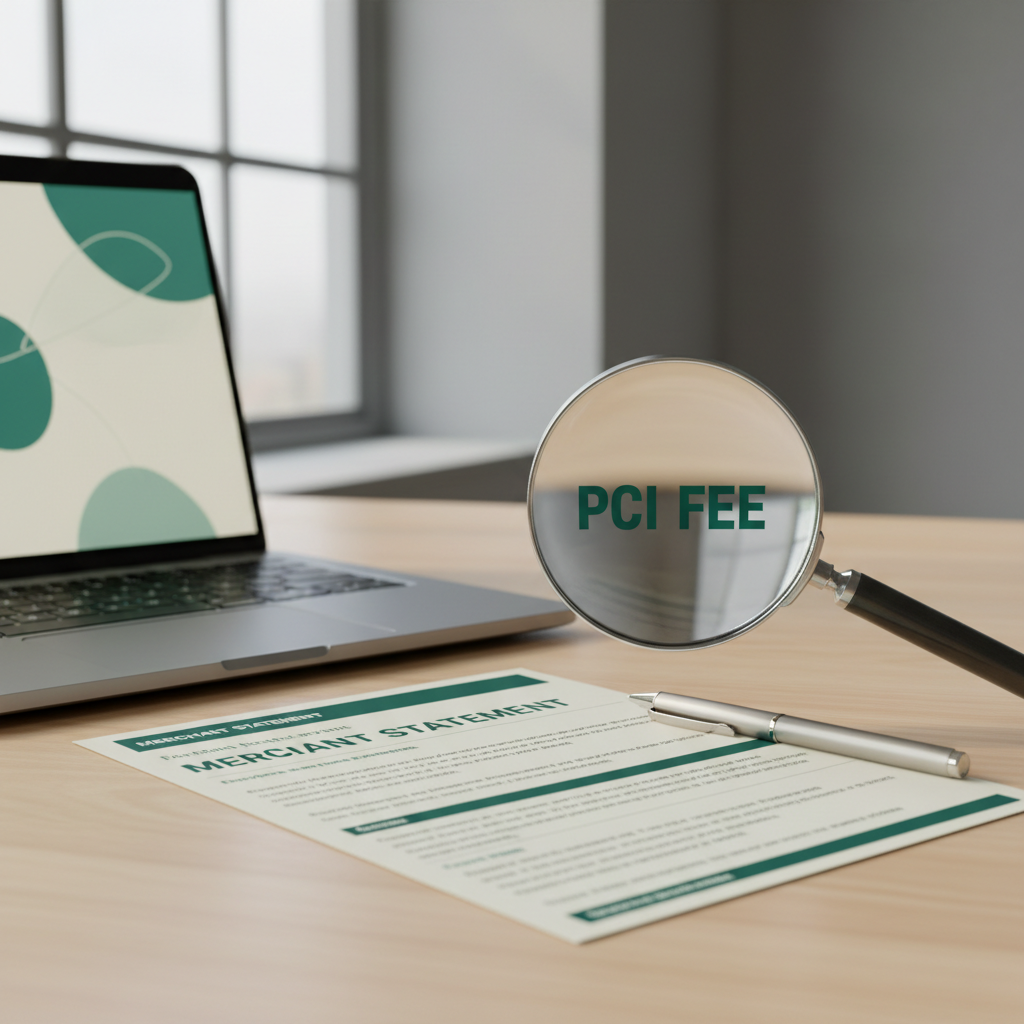
Identifying these fees requires a magnifying glass and a calculator. Processors rarely make it easy. Here is the step-by-step process we use at OrbitBNK to uncover the truth.
1. Calculate the Effective Rate
The effective rate is the only number that doesn't lie. Take your total fees (everything: transaction fees, monthly fees, statement fees) and divide them by your total gross processing volume.
Example: If you processed $100,000 and paid $4,200 in fees, your effective rate is 4.2%. If your salesperson promised you a rate of 1.79%, you are currently trapped in a massive surcharge loop.
2. Look for the 'Surcharge' or 'Differential' Column
On many statements, you will see a list of transactions at your "Qualified" rate at the top. Scroll down to the bottom or the next page. Look for a section titled "Surcharges," "Non-Qualified Fees," or "Discount Adjustments."
You will often see a list of dollar amounts that were processed, followed by a percentage like "1.95%." This is in addition to the qualified rate you already paid. If you see $50,000 in volume listed under a 2.50% surcharge, that is $1,250 in hidden fees that were not part of your "advertised" rate.
3. Identify the Volume Split
Ask yourself: What percentage of my volume is actually hitting the Qualified rate? If 80% of your volume is landing in Mid-Qual or Non-Qual, your "Qualified" rate is essentially a marketing fiction used to get you to sign the contract.
The Conflict of Interest in Tiered Pricing
Think about the incentives. In an Interchange Plus model, the processor makes, for example, 0.20% regardless of whether the card is a basic debit card or a high-end corporate card. Their profit is fixed. They are your partner in trying to lower costs because their income doesn't change based on your downgrades.
In a Tiered model, if a card has an actual cost (interchange) of 1.90% and your Qualified rate is 1.70%, the processor must downgrade that card to the Non-Qualified bucket (let’s say 3.50%) to avoid losing money. However, they don't just move it to 1.90%; they move it to 3.50% and pocket the 1.60% spread. They actually make more money when your cards fail to qualify.
Red Flags in the Fine Print
When reviewing a contract or a new merchant application, look for these phrases that signal a tiered trap:
- "Rates as low as..."
- "Qualified rate applies to swiped consumer cards..."
- "Standard industry downgrades apply..."
- "Non-qualifying card surcharge..."
If the contract doesn't explicitly list the criteria for each tier, the processor can change those criteria at any time, effectively raising your rates without a formal notice of a rate hike.
Moving Toward Transparency
For most businesses processing over $10,000 per month, tiered pricing is almost never the most cost-effective option. The lack of transparency makes it impossible to optimize your payments or understand where your money is going.
High-risk merchants are particularly susceptible to these traps. Because high-risk processing is already more expensive, processors often use tiered models to hide even higher margins, assuming the merchant will be grateful just to have an account and won't question the "Non-Qualified" line items.
How to Exit the Trap
- Request an Interchange Plus Quote: Ask your current processor to move you to IC+. If they refuse or claim it's only for "large corporations," they are likely protecting their margins.
- Audit Your Data Entry: Ensure you are using AVS on all keyed transactions and batching out daily to minimize legitimate downgrades.
- Switch to a Transparent Partner: Work with a platform that provides line-item transparency into what the card brands (Visa/Mastercard) are charging versus what the processor is taking.
Stop Guessing and Start Knowing
Merchant statements are designed to be confusing. If you are seeing terms like "Non-Qual," "Surcharge," or "Bill Back" on your monthly statement, you are likely paying significantly more than you need to. Identifying these tiered pricing hidden fees is the first step toward reclaiming your margins.
At OrbitBNK, we specialize in stripping away the complexity of merchant processing. If you want to know exactly how much you're losing to non-qualified traps, we can help.
Upload your most recent merchant statement for a free, no-obligation audit. We’ll show you the math, point out the traps, and help you find a processing structure that actually fits your business.
Frequently asked questions
What is a non-qualified fee on a merchant statement?+
A non-qualified fee is a surcharge applied to transactions that do not meet a processor's 'Qualified' criteria. This usually happens with rewards cards, corporate cards, or when transaction data (like zip codes) is missing, resulting in a higher processing rate.
How do I avoid non-qualified surcharges?+
The most effective way to avoid these surcharges is to switch from a tiered pricing model to an Interchange Plus pricing model. Additionally, ensuring you use Address Verification (AVS) and batching your terminal daily can help prevent legitimate technical downgrades.
Is tiered pricing better than flat rate?+
Tiered pricing is rarely better than flat rate or Interchange Plus. While the 'Qualified' rate looks lower, the frequent surcharges for 'Non-Qualified' transactions usually lead to a much higher effective rate than a transparent flat-rate or IC+ model.
Why did my transaction downgrade to non-qualified?+
Transactions downgrade for several reasons: the use of a high-rewards or business card, manually keying in card data instead of swiping/dipping, missing security information, or waiting too long to batch out your daily sales.
How do I calculate my effective merchant rate?+
To find your effective rate, take the total fees charged on your statement and divide them by your total processing volume. This percentage gives you the true cost of your processing, regardless of what 'teaser' rates were promised.
See your real processing math
Upload your merchant statement for a free, line-by-line OrbitBNK review.
Start The Clearing