Food Truck Payment Processor Shutdown: Emergency Reactivation Steps
Facing a sudden food truck payment processor shutdown? Follow our expert emergency guide to restore your mobile business cash flow and secure a stable merchant account.
Immediate Recovery Steps for a Food Truck Payment Processor Shutdown
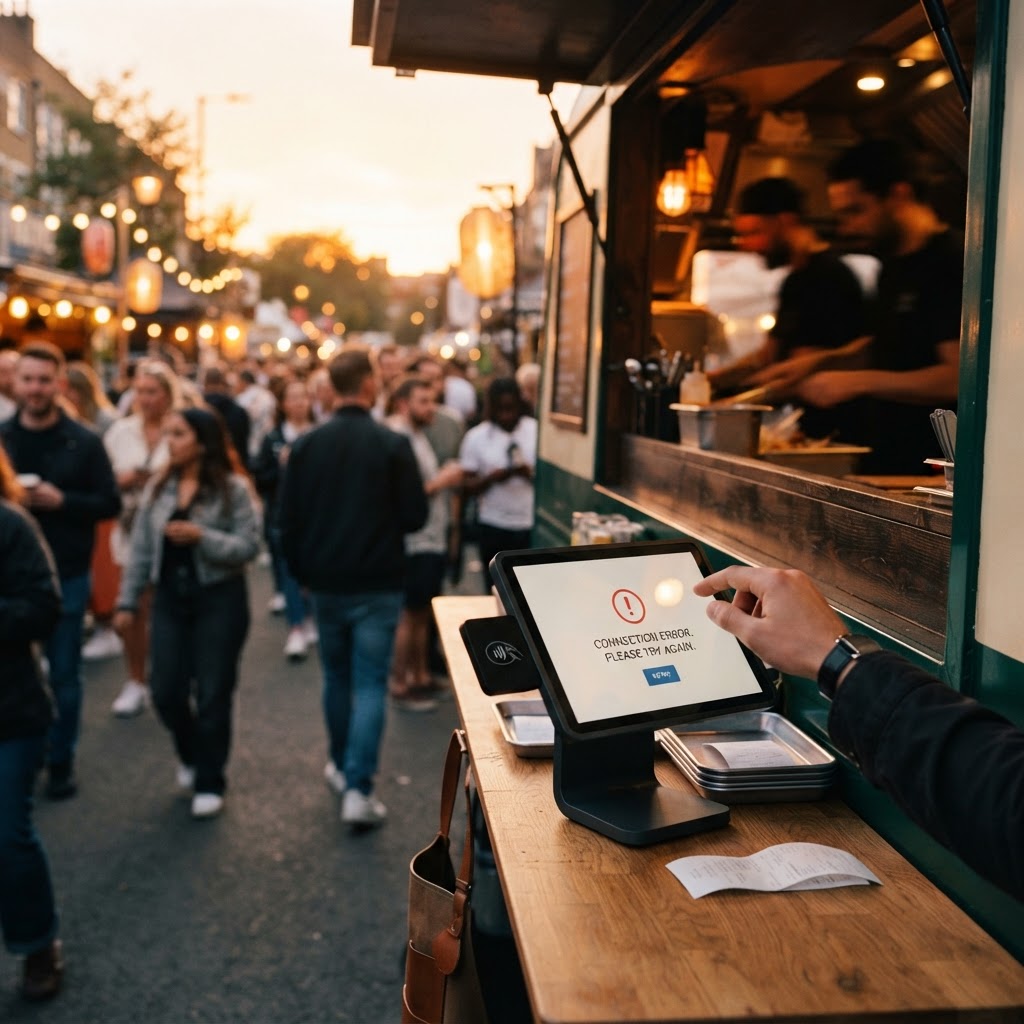
If your mobile food business faces a sudden food truck payment processor shutdown, you must immediately contact your provider's risk department to identify the specific trigger, prepare a package of recent bank and processing statements for verification, and secure a backup merchant account to diversify your risk. Speed and documentation are the two most critical factors in preventing a temporary freeze from becoming a permanent business failure. You can begin the process of restoring your ability to take cards by following these emergency reactivation steps to analyze your current standing.
Why Mobile Vendors Face Higher Risks of Sudden Freezes
In the eyes of a traditional bank or a large payment aggregator, a Food Truck business is often categorized as high-risk. This is not a reflection of your food quality or your work ethic, but rather a result of the logistical nature of mobile commerce. Most processors prefer stable, predictable transaction patterns occurring at a single, verified physical address. When you move between different zip codes, use varying cellular networks for your POS system, and experience massive spikes in volume during festivals or lunch rushes, the automated risk algorithms start to flash red.
Furthermore, the merchant category codes (MCC) assigned to these businesses—often 5812 for restaurants or 5814 for fast food—carry specific expectations for ticket size and volume. If you suddenly land a $4,000 corporate catering gig but your usual ticket is $15, the sudden 'velocity spike' can trigger an automatic hold on your funds. The processor may suspect that your terminal has been stolen or that fraudulent manual entries are being made. Understanding these triggers is the first step toward preventing a future food truck payment processor shutdown.
Common Red Flags That Trigger a Shutdown
While every processor has its own internal 'black box' for risk management, several specific behaviors consistently lead to account terminations or freezes for Food Truck owners:
- The Velocity Spike: A sudden, massive increase in processing volume without prior notification to the processor. If your typical Saturday is $2,000 and you suddenly process $10,000 at a major music festival, the system may flag this as suspicious activity.
- High Chargeback Ratios: If more than 1% of your transactions are disputed by customers, you are in the danger zone. For mobile vendors, this often happens because the 'Doing Business As' (DBA) name on the customer's credit card statement doesn't match the name on the truck, leading to 'unrecognized transaction' disputes.
- Inconsistent Geo-Location: Processing transactions over a wide geographic area in a short period can mimic the behavior of a compromised merchant account.
- Manual Entry Overload: If your card reader fails and you begin typing in card numbers manually (CNP or Card Not Present transactions), your risk profile skyrockets. These transactions are more prone to fraud and carry much higher processing costs.
Essential Document Checklist for Emergency Underwriting
When your account is shut down, the burden of proof is on you to show that your business is legitimate and financially stable. You will need to have an 'Underwriting Package' ready to go. This is not just for your current processor to potentially release your funds, but also for when you apply for a dedicated merchant account that can handle the unique needs of a mobile business. You should have the following digital copies ready:
- Government-Issued Photo ID: Clear, color copies of the business owner's driver’s license or passport.
- Recent Bank Statements: The last three months of your business operating account statements, showing consistent balances and no excessive overdrafts.
- Processing Statements: The last three to six months of statements from your previous processor (even the one that shut you down). This proves your volume and chargeback history.
- Business License and Health Permits: Proof that you are legally authorized to operate in your specific jurisdictions.
- Proof of Physical Presence: Photos of your truck, your menu, and your equipment. If you have a permanent commissary or kitchen address, include utility bills for that location.
How to Negotiate with Your Current Processor
If your funds are held but the account isn't fully terminated, you may have a chance to negotiate. Do not call the general customer support line; ask for the 'Risk and Loss Department' or 'Merchant Verifications.' When you speak with them, remain professional. Explain the reason for any recent volume spikes (e.g., 'We were the primary vendor at the County Fair last weekend').
Offer to provide invoices, signed receipts, or even photos of the event to prove the transactions were legitimate. If they insist on keeping a 'rolling reserve'—where they hold back 10-20% of your daily sales for a period of time—it may be worth accepting in the short term just to keep the cash flowing while you seek a more stable long-term partner.
When to Switch Processors and How to Choose Wisely
Many Food Truck owners start with 'flat-rate' aggregators because they are easy to set up. However, these companies often perform 'front-end' underwriting, meaning they approve you instantly but don't actually vet your business until you hit a certain volume or a risk trigger. This is exactly why a food truck payment processor shutdown often happens at the worst possible time.
It is time to switch to a dedicated merchant account if you are processing more than $10,000 per month or if you have experienced a freeze that lasted more than 48 hours. A dedicated account means you have a specific underwriting file and a person you can call. You should look for 'interchange-plus' pricing, which is more transparent and usually results in lower effective rates than flat-rate models. You can learn more about these structures in our comprehensive payment guides.
How OrbitBNK helps
OrbitBNK acts as your payment intelligence partner to ensure you never get caught off guard by a merchant account freeze again. We do not operate as a bank; instead, we provide the expertise needed to navigate the complex world of high-risk processing. Our team performs a deep-dive review of your existing processing statements to identify why you were flagged and where you are overpaying in hidden fees.
We help Food Truck owners prepare their underwriting documentation so it meets the stringent requirements of stable, high-quality processors. By understanding your specific risk profile, we match you with a processor that specializes in the mobile hospitality industry. This means you get a partner who expects velocity spikes and understands that your business address might change daily. We help you move from a position of vulnerability to one of stability, ensuring your kitchen stays open and your transactions stay fluid.
Future-Proofing Your Mobile Cash Flow
To prevent another food truck payment processor shutdown from paralyzing your business, consider a 'multi-MID' strategy. This involves having more than one Merchant Identification Number (MID) with different processors. If one account is flagged, you can instantly flip your POS system to the backup account. This redundancy is common in high-risk industries and is a smart move for any mobile vendor whose livelihood depends on digital payments.
Additionally, ensure your DBA name on the customer's receipt is crystal clear. Instead of 'John Doe LLC,' it should say 'The Burger Truck - 555-0199.' This simple change can reduce 'unrecognized' chargebacks by up to 30%. Always keep your documentation updated and your processing volume within the limits you originally reported to your underwriter.
Don't wait for a crisis to secure your business's future. If you are currently facing a freeze or want to prevent one, take the first step toward a more stable processing environment. Get started with an emergency review today and let us help you find a processing partner that actually understands the mobile food industry.
Frequently asked questions
Why did my food truck payment processor shut down my account?+
Most shutdowns are triggered by automated risk algorithms flagging 'velocity spikes' (sudden high sales), processing from multiple geographic locations, or an increase in chargebacks. Aggregators often shut down accounts first and ask questions later to protect themselves from potential fraud.
How long will my funds be held after a processor shutdown?+
Typically, processors can hold funds for 30, 60, or even 180 days to cover potential chargebacks. However, providing immediate documentation to their risk department can sometimes expedite the release of funds or lead to an account reactivation.
What is the difference between an aggregator and a dedicated merchant account?+
Aggregators like Square or PayPal group many businesses under one giant account, which leads to faster setup but higher risk of sudden shutdowns. A dedicated merchant account involves a personalized underwriting process, giving you more stability and often lower costs for high-volume businesses.
Can I have two different payment processors for one food truck?+
Yes, this is known as a multi-MID strategy and is highly recommended for mobile vendors. Having a backup processor ensures that if one account is frozen, you can continue accepting payments through the second provider without losing sales.
Will a shutdown affect my ability to get a new merchant account?+
It can. If you are placed on the MATCH list (Member Alert to Control High-risk), it becomes much harder to get traditional processing. This is why it is vital to resolve the issue professionally and seek help from experts who understand high-risk underwriting.
See your real processing math
Upload your merchant statement for a free, line-by-line OrbitBNK review.
Start The Clearing