Convenience Store Merchant Account Frozen: How to Recover
Is your convenience store merchant account frozen? Discover why processors hold your retail funds and follow our actionable guide to get reinstated quickly.
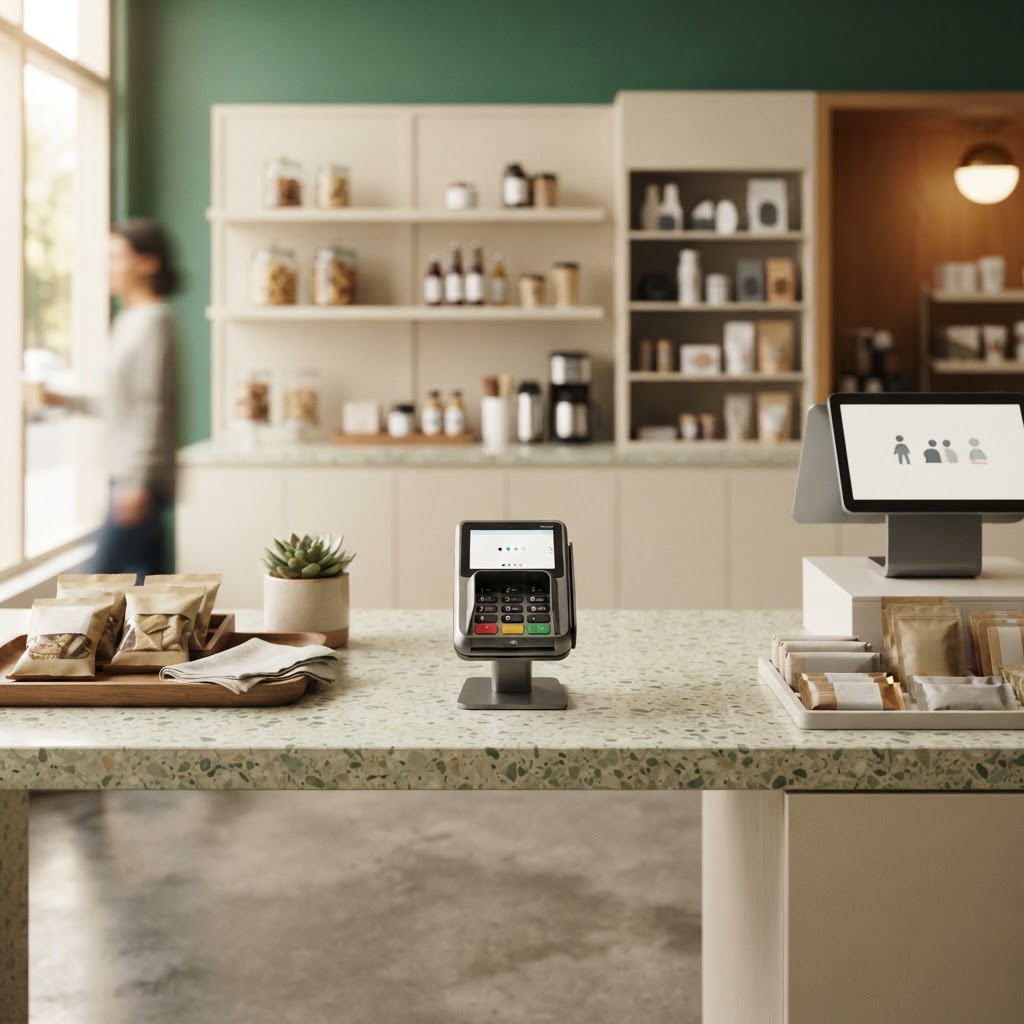
To recover when your convenience store merchant account is frozen, immediately contact your processor’s risk department to determine the trigger—usually sudden ticket spikes, restricted age-gated inventory, or elevated card-not-present fraud. Provide comprehensive documentation including inventory invoices, business licenses, bank statements, and point-of-sale shift logs to clear the compliance flag, or deploy a secondary high-risk merchant account to restore card processing without cash-flow disruption.
Running a corner market, bodega, or fuel-stop market requires steady, daily cash flow. When your card reader stops batching out and your settlement funds get placed on a risk hold, operations grind to an immediate halt. Knowing why acquiring banks freeze retail businesses and taking methodical steps toward resolution is critical to your store's survival.
Why Convenience Store Merchant Accounts Get Frozen
Acquiring banks and payment aggregators monitor retail transactions using automated risk algorithms. Convenience store operators face unique exposures due to their product inventory, operating hours, and sales velocity.
- Restricted or Age-Gated Products: Standard merchant service providers often prohibit or severely restrict sales of vape products, synthetic botanicals, CBD, delta-8, and tobacco accessories. If a generic aggregator identifies these items on your point-of-sale receipt slips or distributor invoices, they will place an immediate freeze on settlements.
- Sudden Spikes in Transaction Volume or Ticket Size: Convenience retail typically operates with predictable metrics: average ticket values between $8 and $25. If you process a sudden batch of $200 transactions—frequently associated with carton sales, emergency stock purchases, or money order equivalents—risk algorithms interpret the jump as stolen card testing or account hijacking.
- Excessive Keyed-In Transactions: If an older pin pad fails or a clerk manually keys in card details during phone orders or broken-terminal situations, acquiring banks raise immediate flags. High percentages of card-not-present (CNP) transactions violate standard retail processing agreements (MCC 5499).
- Suspected Cash-Back or Money Laundering Operations: Repeated debit card cash-back transactions, heavy gift card sales, or sudden bursts of high-value prepaid card purchases draw scrutiny under federal anti-money laundering (AML) and know-your-customer (KYC) rules.
Immediate Steps to Take in the First 24 Hours
Panicking or processing identical cards through another standard consumer terminal on your counter will compound the problem. Systematically isolate the issue within your first operating shift.
- Capture the Risk Communication: Avoid hanging up on your processor's risk specialist. Record the agent’s name, employee ID, direct ticket reference number, and specific reason for the account freeze (such as high chargeback ratio, velocity breach, or prohibited SKU detection).
- Halt Ambiguous Point-of-Sale Transactions: Instruct staff to stop manual card entries. If your processing gateway remains partially accessible for PIN-debit only, prioritize card-present swipe or EMV transactions.
- Isolate Questioned Transaction Batches: Review batch settlement reports from the last 72 hours. Pinpoint any abnormal single tickets, repeat card swipes from the same customer within minutes, or sudden bursts of round numbers.
- Consult Knowledge Bases and Specialists: Review industry-specific recovery processes through industry guides to understand your rights regarding held funds under merchant service contract agreements.
What Documents You Need for Underwriting Clearance
When appealing an underwriting freeze, acquiring banks review your operational legitimacy. Sending incomplete documents creates multi-day delays. Assemble an underwriting recovery file immediately:
- Business Entity Paperwork: Articles of incorporation, state business license, reseller permit, and your current municipal merchant licenses.
- Specialized Inventory Permits: State lottery authorizations, municipal tobacco retail licenses, liquor licenses, and retail vape compliance permits.
- Recent Processing Statements: The last 3 to 6 months of complete credit card processing merchant statements showing net volume, interchange rates, chargeback rates, and refund ratios.
- Wholesale Supplier Invoices: Clean invoices from legitimate distributors showing purchases of high-risk SKUs (cigarettes, packaged energy drinks, vaporizers, convenience sundries) to prove inventory chain-of-custody.
- Bank Statements: Complete monthly statements for your operating commercial checking account spanning the past 3 to 6 months to prove daily operating solvency.
- Point-of-Sale Shift Audits: Time-stamped electronic register tapes proving cards were physically tapped or inserted via EMV chip, ruling out remote card testing fraud.
How to Communicate with Risk Departments and Clear the Hold
Merchant risk adjusters operate under strict loss-prevention guidelines. Your objective is demonstrating operational control and low systemic default risk.
Provide Clear Explanations for Anomalies
If a single customer purchased ten cartons of cigarettes for an event, send the scanned ID log, the itemized POS ticket, and the matching register tape. Context removes fraud suspicion.
Submit Clean, High-Resolution Documentation
Never send blurry smartphone photos taken under retail fluorescent lights. Scan invoices and licenses as flat, multi-page PDFs with transparent file names (e.g., State_Tobacco_License_2025.pdf).
Address the Root Underwriting Cause Directly
If your merchant agreement prohibited delta-8 or glassware and an auditor noticed these items on-site, provide proof of inventory segregation or an agreement to transition restricted categories to an approved high-risk terminal.
When to Switch Processors vs. Fighting for Reinstatement
Not every retail freeze ends in restoration. Certain aggregators terminate accounts outright once their automated scans flag restricted retail categories.
Fight for Reinstatement If:
- The freeze was caused by a clear, one-time error (e.g., an employee accidentally keying an extra zero into a custom retail transaction).
- You have an established dedicated merchant account with a contract intact for several years and a chargeback ratio under 0.5%.
- The acquiring bank requests simple KYC updates, renewed business licenses, or explanations of seasonal summer holiday traffic spikes.
Switch to a Specialized High-Risk Processor If:
- The provider informs you that your inventory profile (vape, tobacco, specialty botanicals, hemp products) breaches their standard card brand acceptable use policies.
- You were onboarded through a low-touch flat-rate payment aggregator that does not support manual underwriting for convenience retail.
- The bank imposes a rolling 180-day reserve on 100% of your retail credit card funds, crippling working capital.
If termination is imminent, acting quickly prevents your business entity or personal guarantee from landing on the MATCH (Member Alert to Control High-Risk Merchants) list. If you are already facing severe fund holds, begin with an emergency account reactivation review to analyze available alternative acquiring channels.
Preventing Future Account Holds in Convenience Retail
Long-term payment stability requires configuring your processing stack specifically for multi-category retail trade.
- Segment Prohibited or Restricted Inventory: Run age-restricted SKUs through an account specifically underwritten for specialty retail, keeping fuel and basic grocery inventory on lower-cost traditional rails.
- Enforce Chip-and-PIN Strictness: Disable manual card entry on counter terminals. Requiring EMV dip or tap shifts counterfeit card liability away from your counter back to the card-issuing bank.
- Monitor Daily Batch Limits: If your merchant agreement caps your monthly volume at $50,000, call your processing representative before high-traffic holiday weekends (Memorial Day, Labor Day) to request temporary velocity limit increases.
- Adopt Modern Terminal Encryption: Use point-to-point encryption (P2PE) terminals integrated directly into your central cash register to eliminate duplicate entry errors.
How OrbitBNK Helps
Navigating an unexpected freeze while managing foot traffic is exhausting. OrbitBNK acts as your dedicated payment-intelligence advocate, bringing clarity to opaque processor decisions.
- Forensic Statement and Processing Reviews: We analyze your historical processing statements to identify hidden risk flags, effective interchange markups, chargeback patterns, and categorization mismatches that trigger underwriting algorithms.
- Underwriting Dossier Preparation: OrbitBNK helps organize your balance sheets, inventory supplier receipts, and compliance licensing into a clean underwriting package that directly answers the risk department's concerns.
- Targeted Merchant Account Matching: When standard processors cut ties due to your retail SKU mix, OrbitBNK matches your convenience business with stable, fully disclosed high-risk acquiring banks that understand the retail convenience model and explicitly support age-gated retail categories.
Do not let an automated banking hold threaten your payroll or inventory deliveries. Secure your retail payments using our specialized emergency merchant reactivation protocol to analyze your hold and locate the right acquiring partner today.
Frequently asked questions
Why did my processor freeze my convenience store merchant account without warning?+
Processors use automated risk monitoring algorithms. If your store processes a sudden spike in ticket amounts, experiences an increase in manually entered transactions, or sells restricted items like tobacco, delta-8, or vape without prior high-risk underwriting clearance, the system automatically halts payouts to protect against chargebacks and fraud.
How long does a merchant account freeze last for retail stores?+
A risk freeze typically lasts between 24 hours and several weeks, depending on how quickly you provide requested documentation like distributor invoices, POS shift reports, and business licenses. If an account is permanently terminated, funds can be held in reserve for up to 180 days to cover potential chargebacks.
Can I process credit cards using a backup terminal while frozen?+
You can only use a backup terminal if it is tied to an entirely separate, active merchant account with a different acquiring bank. Running transactions through an unapproved secondary device on the same frozen MID or utilizing personal peer-to-peer payment apps violates card network rules and can result in severe penalties or MATCH list placement.
What is the difference between a merchant account freeze and termination?+
A freeze is a temporary hold on your daily settlement funds while the risk team reviews specific transactions or requires updated documentation. A termination is a permanent closure of your processing contract, often resulting in held reserve funds and requiring you to secure a new merchant account with a different provider.
See your real processing math
Upload your merchant statement for a free, line-by-line OrbitBNK review.
Start The Clearing