Bar Merchant Account Frozen? Here Is Your Immediate Recovery Plan
Discover exactly why bar merchant accounts get frozen or terminated and the step-by-step recovery process to get your business processing payments again.
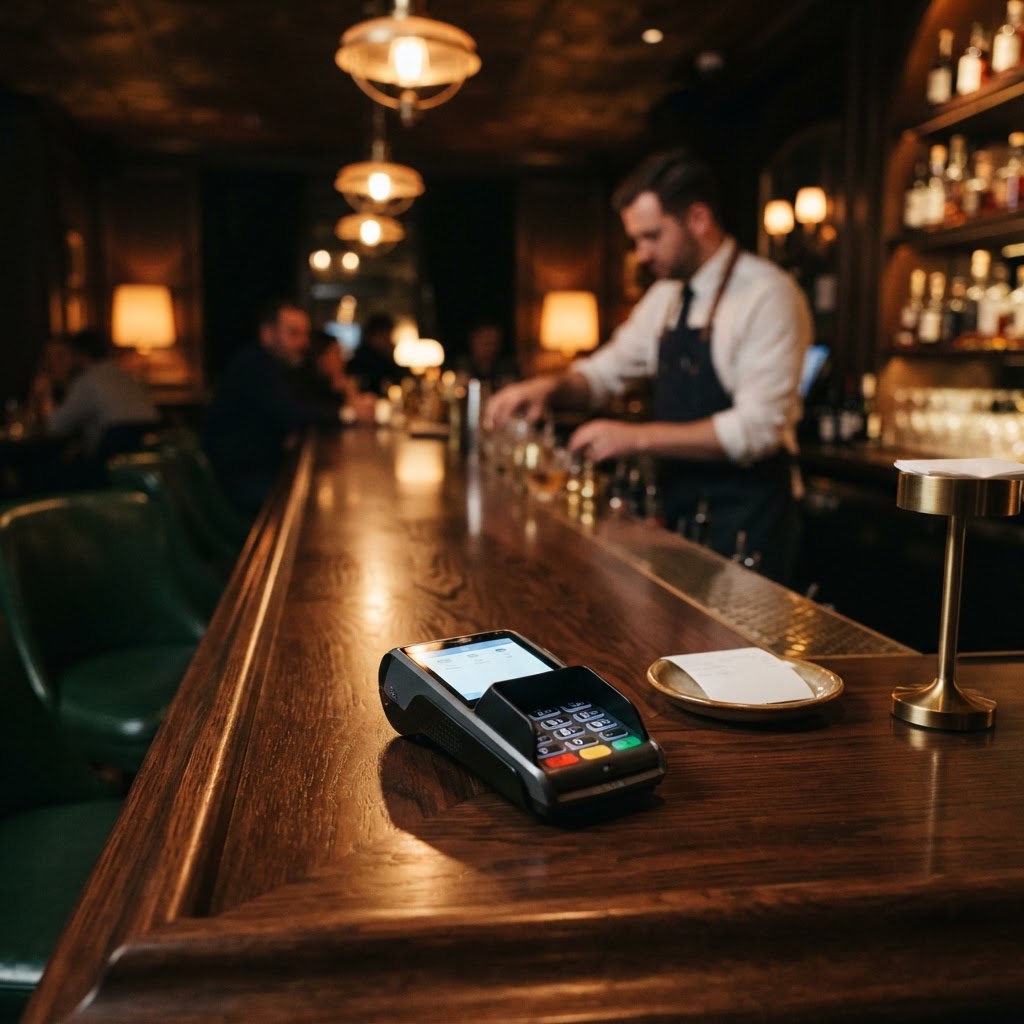
Immediate Action: What to Do in the First 24 Hours
If your bar merchant account is frozen, you must immediately stop attempting to run transactions on that specific terminal or gateway, gather your last three months of processing statements, and contact your provider to identify if the hold is a temporary security review or a permanent termination. Taking the wrong steps—like trying to "test" cards or opening a new account under a different name—can land your business on the MATCH list, effectively blacklisting you from the industry.
For most bar owners, the silence from a processor is the most deafening part of the experience. You wake up to find your funds haven't hit the bank, and your POS system shows a generic communication error. This isn't just a technical glitch; it is a financial emergency. The first 24 hours are critical. You need to distinguish between a funding hold (where you can still swipe cards but won't get paid) and a full termination (where your ability to process is completely cut off).
Why Bars Are Labeled High-Risk by Processors
To solve the problem, you have to understand how the banking world views your establishment. In the eyes of a traditional merchant acquirer, bar owners operate in a "high-risk" environment. This isn't necessarily a reflection of how you run your business, but rather the statistical realities of the nightlife industry.
Several factors contribute to this classification:
- High Chargeback Potential: Disputes are more common in environments where alcohol is served. Customers may forget a large tab, regret a VIP bottle service purchase the next morning, or claim they never authorized a tip.
- Fluctuating Ticket Sizes: A bar might process hundreds of $10 drink orders, followed by a sudden $2,000 corporate event or VIP table. To a fraud algorithm, that $2,000 transaction looks like a stolen card until proven otherwise.
- Regulatory Scrutiny: The sale of age-restricted products always adds a layer of underwriting complexity that general retail stores don't face.
Understanding these risks helps you speak the language of your processor's risk department. When you call them, you aren't just a frustrated owner; you are a business operator who understands their high-risk processing concerns and has documentation to mitigate them.
Common Red Flags That Trigger a Freeze
Most account freezes aren't random. They are triggered by specific "out-of-pattern" activities. For bar owners, these usually fall into three categories:
- Velocity Spikes: If your average Saturday night brings in $5,000, and you suddenly process $15,000 during a holiday weekend or a major sporting event without prior notice, the system may auto-freeze to protect against potential fraud.
- Increased Dispute Ratios: If your chargeback rate creeps near or above the 1% threshold, processors will often hold funds as a "reserve" to cover future potential losses.
- Inconsistent MCC Codes: If your business was originally coded as a restaurant but your revenue now comes almost exclusively from late-night alcohol sales (MCC 5813), a routine audit can trigger a suspension for "prohibited business activity."
The Difference Between a Freeze and a Termination (MATCH) List
A freeze is often a temporary state. The processor wants to see invoices, proof of delivery (or in the case of a bar, signed receipts), and bank statements to ensure you are a legitimate entity.
Termination, however, is a much more severe action. If a processor terminates you "for cause," they may place your business and its principals on the Member Alert to Control High-risk (MATCH) list, formerly known as the Terminated Merchant File (TMF). Being on this list makes it nearly impossible to get approved for a standard merchant account for five years. If you find yourself in this situation, you need a specialized emergency reactivation strategy to navigate the path forward.
The Essential Document Checklist for Reactivation
When you fight a freeze or apply for a new account after a termination, you need to be "underwriting-ready." Do not wait for the processor to ask. Having these documents organized in a single PDF folder can shave weeks off your wait time:
- Processing Statements: The most recent 3–6 months of merchant processing statements showing volume and chargeback ratios.
- Bank Statements: The most recent 3 months of business bank statements to prove liquidity.
- Business License: A valid liquor license and local business operating permit.
- Identification: Clear color copies of the driver’s licenses for all owners with 25% or more equity.
- Voided Check: A pre-printed voided check for the account where funds should be deposited.
- POS Reports: Summary reports from your Point of Sale system that match the processing volumes on your statements.
When to Switch Processors (and How to Avoid the Next Freeze)
If your current processor has frozen your account more than once in a year, or if they have stopped communicating entirely, it is time to look for a new partner. Standard processors like Square, Stripe, or Clover (Direct) are often "aggregate" processors. They approve you instantly but perform underwriting after you start processing. This is why many bar owners get shut down after three months of successful business—that's when the human underwriters finally look at the file.
It is time to switch to a dedicated high-risk merchant account when:
- Your monthly volume exceeds $20,000 consistently.
- You offer high-ticket items like bottle service or private event rentals.
- You have a chargeback rate that fluctuates near 1%.
- Your current provider cannot give you a dedicated relationship manager.
Moving to a provider that performs "up-front underwriting" means you might wait 3-5 days for approval, but once you are live, you are far less likely to face a sudden freeze because they already know your business model.
How OrbitBNK Helps
Navigating the world of payment processing is complex, especially when your cash flow is on the line. OrbitBNK operates as a payment-intelligence partner for bar owners, providing the tools and expertise needed to secure stable processing.
We assist by performing a comprehensive free statement review to identify hidden fees and risk markers that might be triggering flags in your current account. Our team helps you prepare your underwriting package, ensuring that your documentation is presented in the best possible light to potential bank partners. Finally, we leverage our network to match your specific business profile—whether you are a local dive bar or a high-end nightclub—with a processor that understands and welcomes your industry, rather than one that merely tolerates it.
Building a Resilient Payment Strategy for the Long Term
To ensure you never face a total shutdown again, consider a redundant payment strategy. This involves having a primary merchant account and a secondary "backup" account. While you shouldn't split transactions to hide volume, having a secondary account vetted and ready to go can be the difference between staying open and closing your doors if your primary provider has a technical outage or a sudden policy change.
Always maintain a reserve of capital to cover at least two weeks of operating expenses in case of a funding hold. Payment processing is the lifeblood of the modern bar; treat it with the same level of oversight you give your inventory and your staff.
If your bar merchant account is currently frozen or you have received a notice of termination, don't wait for the situation to resolve itself. Contact our specialists today for a professional review of your situation and let us help you find a stable, long-term processing home.
Frequently asked questions
How long can a processor hold my funds if my account is frozen?+
If an account is frozen for a security review, funds are typically held for 24 to 72 hours. However, if the account is terminated for high risk or suspected fraud, the processor may legally hold your funds for up to 180 days to cover potential chargebacks.
Can I open a new merchant account if I am on the MATCH list?+
It is significantly more difficult but not impossible. You will need to work with a high-risk specialist who can place you with a 'non-traditional' or 'high-risk' acquirer that is willing to overlook a MATCH listing in exchange for higher reserves or slightly higher rates.
Will my POS system work with a new processor?+
Most modern POS systems are 'gateway agnostic,' meaning they can work with multiple processors. However, some proprietary systems are locked to a specific provider. You should check your contract to see if your hardware can be reprogrammed.
Why did my bar account get shut down but not my neighbor's restaurant?+
Bars and nightclubs carry a different Merchant Category Code (MCC) than restaurants. Processors view 'drinking places' as higher risk due to late-night hours and higher dispute rates compared to family-oriented dining establishments.
See your real processing math
Upload your merchant statement for a free, line-by-line OrbitBNK review.
Start The Clearing